
AI Enterprise Mixer - Japan
Gallery

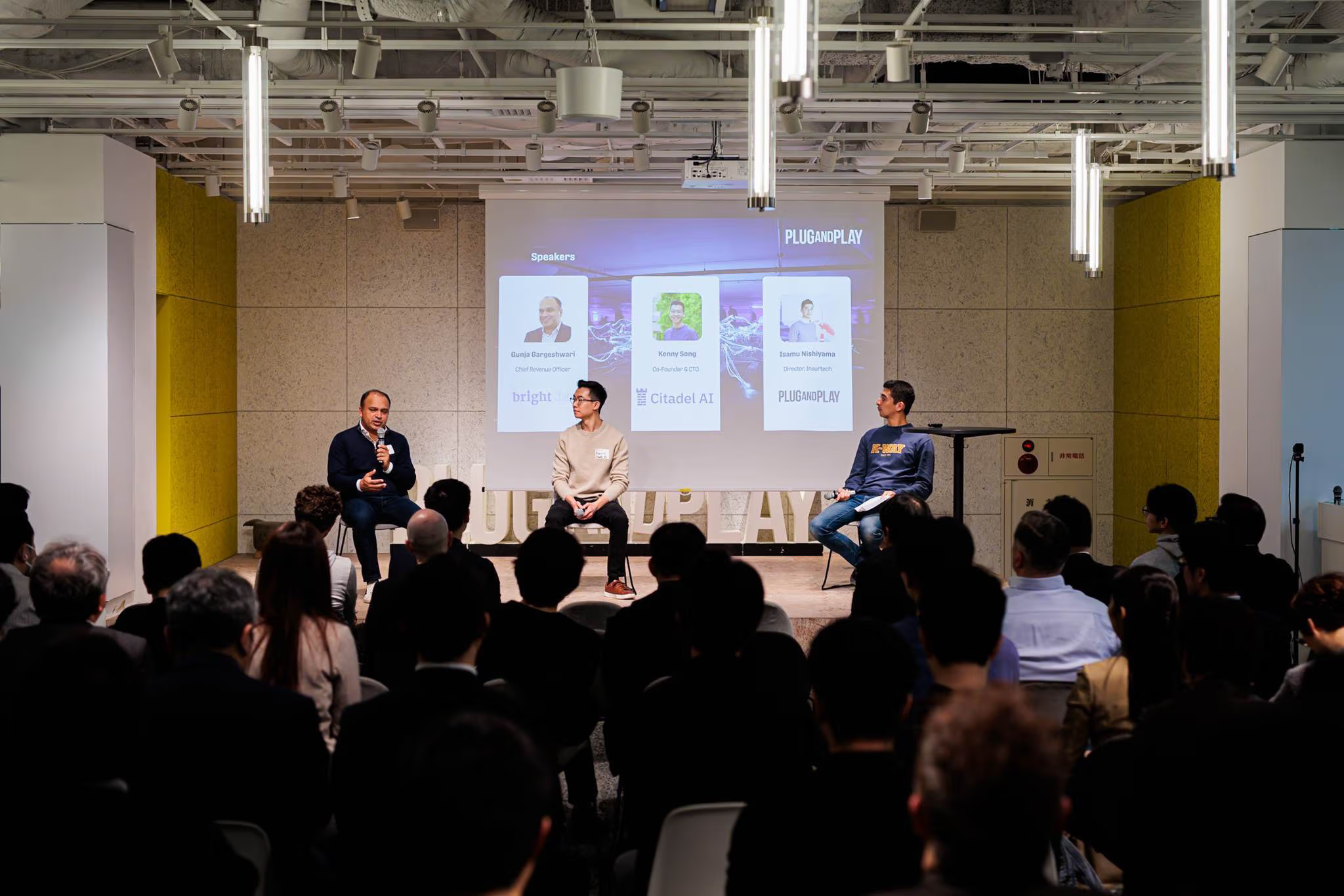






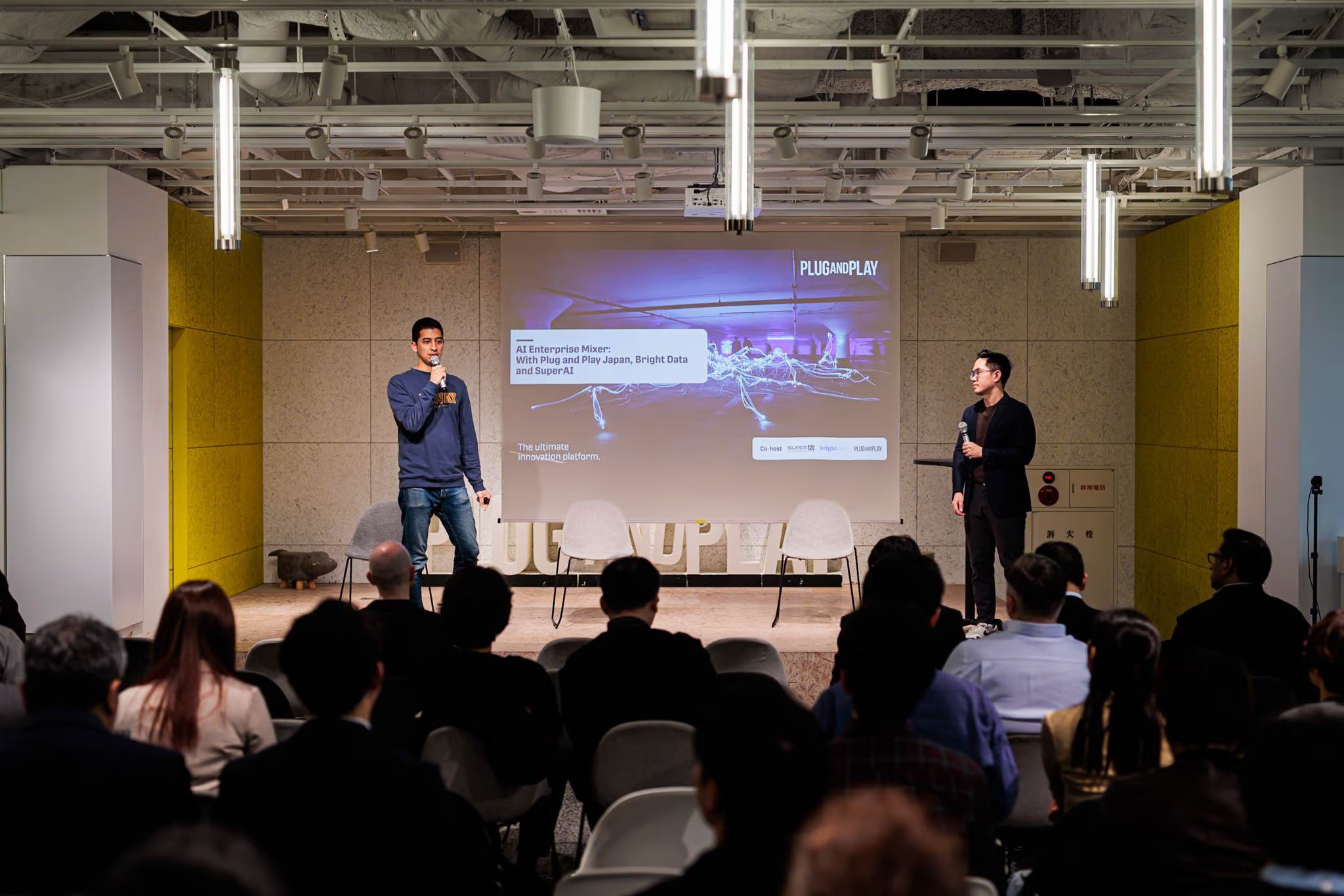







In partnership with Plug and Play Japan and Bright Data, SuperAI hosted an AI Enterprise Mixer in Tokyo, bringing together a curated group of corporate leaders, builders, and solution providers to cut through the noise and focus on what is actually working in enterprise AI.
What does it actually take to move AI from a proof of concept into measurable business value? That was the central question at the event’s executive panel, featuring Gunja Gargeshwari (Chief Revenue Officer, Bright Data) and Kenny Song (Co-Founder and CTO, Citadel AI), moderated by Isamu Nishiyama (Director, Insurtech, Plug and Play Japan).
The discussion built on a keynote by Chiho Nelson (Director, Enterprise & AI, Plug and Play Japan), who highlighted a defining characteristic of AI adoption in Japan: it is less about disruption and more about integration. While US companies prioritize monetization and European firms emphasize regulation, Japanese enterprises are focused on modernizing legacy systems and embedding AI into existing workflows. This has driven strong interest in vertical, problem-specific applications and physical AI, where robotics and automation address labor shortages. Across use cases, the goal is clear: augment human work rather than replace it.
Kenny traced the evolution of enterprise AI, from traditional machine learning to generative AI and now autonomous agents. With each step, capabilities have expanded, but so have risks. Unlike earlier systems, generative AI is accessible across organizations and produces outputs that executives can directly evaluate, making risks like hallucinations highly visible. As AI becomes more powerful, governance is no longer optional; it is a core requirement.
Gunja emphasized another shift: enterprise AI is moving from internal optimization to customer-facing experiences. Users increasingly expect conversational interfaces that provide real-time, contextual insights. This requires a new kind of data infrastructure that combines internal and external data in real time. Many enterprises, however, are still operating on legacy architectures not designed for this shift. Companies like Singapore Airlines are already demonstrating what this looks like in practice, with AI-powered interfaces embedded directly into customer journeys.
Both speakers addressed why so many AI projects fail to move beyond pilots. Success requires focus, including dedicated teams, rapid iteration, and clear performance measurement. Just as critical is investment in evaluation and monitoring systems, the often overlooked components that make AI production-ready.
Japan stands out as a leader in AI application adoption, despite limited frontier model development. Years of digital transformation laid the groundwork, but generative AI lowered the barrier to entry and accelerated uptake. Combined with Japan’s strength in manufacturing and robotics, this positions the country at the forefront of applied AI, where real-world impact, not just technical advancement, defines success.